
The Case for Staying Permeable
"When we retreat from these connections and stop relating, we are interrupting the very interactions that keep us alive."

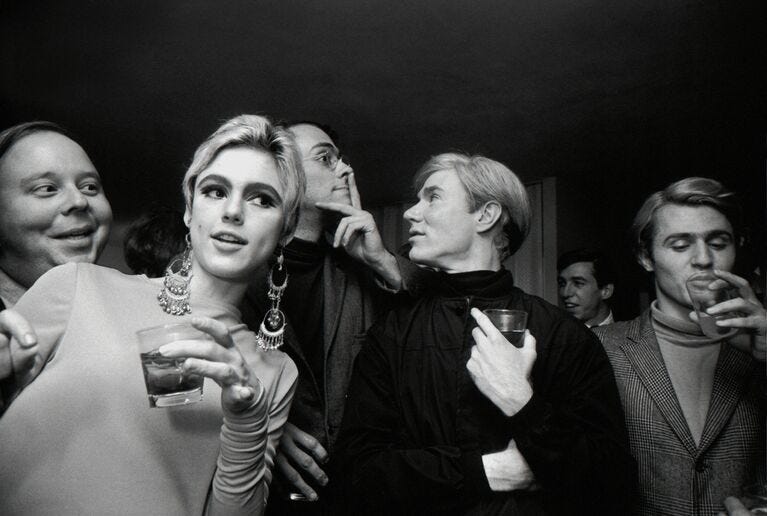
Systems theory understands that, for any system to stay alive and grow, it needs to maintain its boundaries permeable.
Systems, being them an ecosystem, an organization, a group of some sorts, or even individual creators, have to let information flow in and out. They need to have permeable boundaries, to stay connected to what’s happening around them, able to sense when things shift, and adapt accordingly.
But when complexity and uncertainty get too overwhelming, our natural response is to stop wanting the feedback and start shutting down those permeable boundaries.
This self-protective action of putting up the walls is an attempt to shut down the discomfort of complexity and uncertainty, and all of a sudden, the boundaries aren’t permeable anymore, and the system atrophies and becomes self-referential.
Looking inward is much more comfortable than outward.
In relational ontology, we don’t think of ourselves as fixed entities with boundaries to protect. We think of ourselves as living networks of relationships. You don’t exist in isolation and then interact with your audience, your craft, your influences — you’re actually constantly being created through those interactions. Through the conversations you have with readers, through the art you consume, through the feedback that lands (and the feedback that hurts, or even the silence that kills us slowly), through the cultural moment you’re responding to. You are always becoming through these relationships.
So when we retreat from these connections and stop relating, we are interrupting the very interactions that keep us alive.
We have an infinite number of reasons for that. Our current levels of complexity and uncertainty are beyond what any human evolved to endure, so I totally understand (and feel) the urge to retreat inside our cozy walls and look inward, so we can have a false sense of control.
The world is just so overwhelming right now that it’s becoming easier and easier to rely more on an internal logic than what’s actually happening in the world, isn’t it?
AI is transforming how we create and consume, attention is fragmenting in a thousand directions, entire platforms rise and fall in months. The climatic, economic, and political crises have quite literally robbed us of the future, so nowadays not even humanity can count with some form of continuation.
Our levels of anxiety and mourning for a lost future or any sense of meaning are enormous, and it leads to a very understandable defensive closure. But in order to create, in order to stay alive, we must remain open, responsive, and willing to be changed by what we encounter.
Staying permeable and in relation is very uncomfortable, especially in these circumstances. It means letting yourself and your work be affected by what you read, by what your audience tells you, by art that challenges you, by criticism that contains truth. It means being willing to evolve in ways you didn’t plan for. It means prioritizing genuine connection over control, even when control feels so much safer.
But I believe that’s the only way through complexity.
Instead of focusing on defending our voice, our singularity, our creative identity, and whatever we find by looking inward, we should consider staying curious and embracing whatever comes from real relationships.
Your work doesn’t exist in spite of its influences and interactions. It exists through them.
So the question isn’t whether you’ll be changed by what you encounter. You will be. The question is whether you’ll stay open enough to let that change be fertile, so a little bit of life sprouts here and there, alongside a possible future.
All creation is relational. If you found this post helpful, please consider sharing it with other creators or supporting me with a one-time contribution. ♡
A quote to inspire:
“The future is uncertain . . . but such uncertainty lies at the very heart of human creativity.”
— Ilya Prigogine
What an exceptional article! I can see exactly what this alludes to socially. I find it very interesting, this "permeableness", how it is essecial to growth and survival.
Thank you for sharing this, Raquel. I really enjoyed it. (And love Andy Warhol!) :)
I think this is very true, which in my opinion makes it even more important to think carefully about what we are being permeable to. Like, I try hard not to be too permeable to global news...because that quickly snuffs out my enthusiasm for life. But I like choosing some Substacks that I think are really helpful and staying permeable to them.
I think when we curate our permeability consciously, we have a better chance of paying attention to the influences that help us and enable us to support our community even better.
And it's important to remember that others are permeable to us, too. I try hard not to post "woe to the world" comments because I don't think it's for other people's highest good. I don't want to be part of a tidal wave of overwhelm for others.
Also, I always want to be permeable to optimism! Thank you for highlighting this important consideration.