
When Two Surrealists Built a Paradise
And how the war tragically ended it.

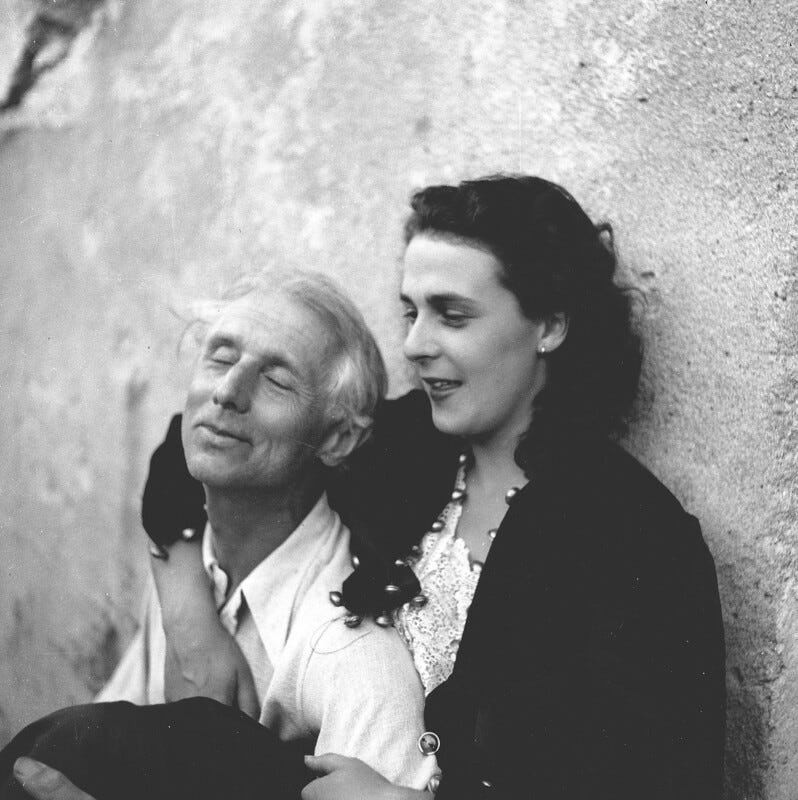
There’s a farmhouse in southern France that nobody gets to visit, but that holds a story of love, creativity, and collaboration. It is still decorated exactly as the two artists left it in 1940. The doors are covered in paintings of horses and hybrid creatures, and concrete beings live on the garden walls.
The family who owns it keeps it private, and because of that, it has remained preserved the over eighty years. This house is part of the short-lived paradise created by Leonora Carrington and Max Ernst when they tried to build a life together.
This is the story of how they got there, what they created, and why it all fell apart.
Max Ernst:
By 1937, Max Ernst had already lived several creative lifetimes. He was born in 1891 near Cologne, studied philosophy and psychology at university without finishing, and got dragged into World War I. The trenches destroyed whatever optimism he’d had about human rationality, so after the war he helped start the Dada movement in Cologne with Hans Arp, making collages and assemblages that were designed to offend conventional taste.
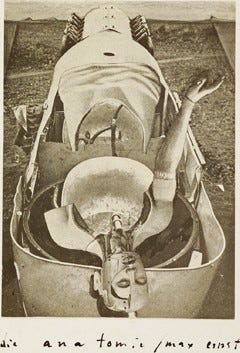
André Breton invited him to exhibit in Paris in the early 1920s, and Ernst became central to Surrealism as it was taking shape. He developed techniques that sound simple but opened up new creative territory: frottage meant rubbing textures from wood grain or fabric onto canvas; grattage involved scraping away layers of paint to reveal what was underneath. Both methods let randomness into the creative process in ways that painting from imagination alone couldn’t achieve.
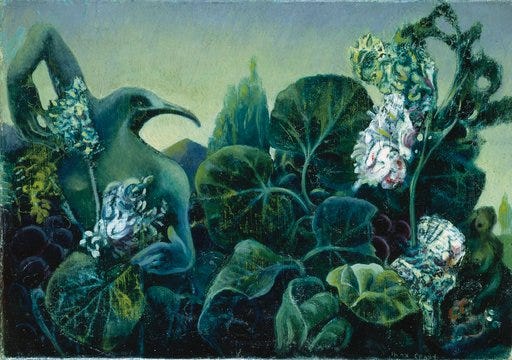
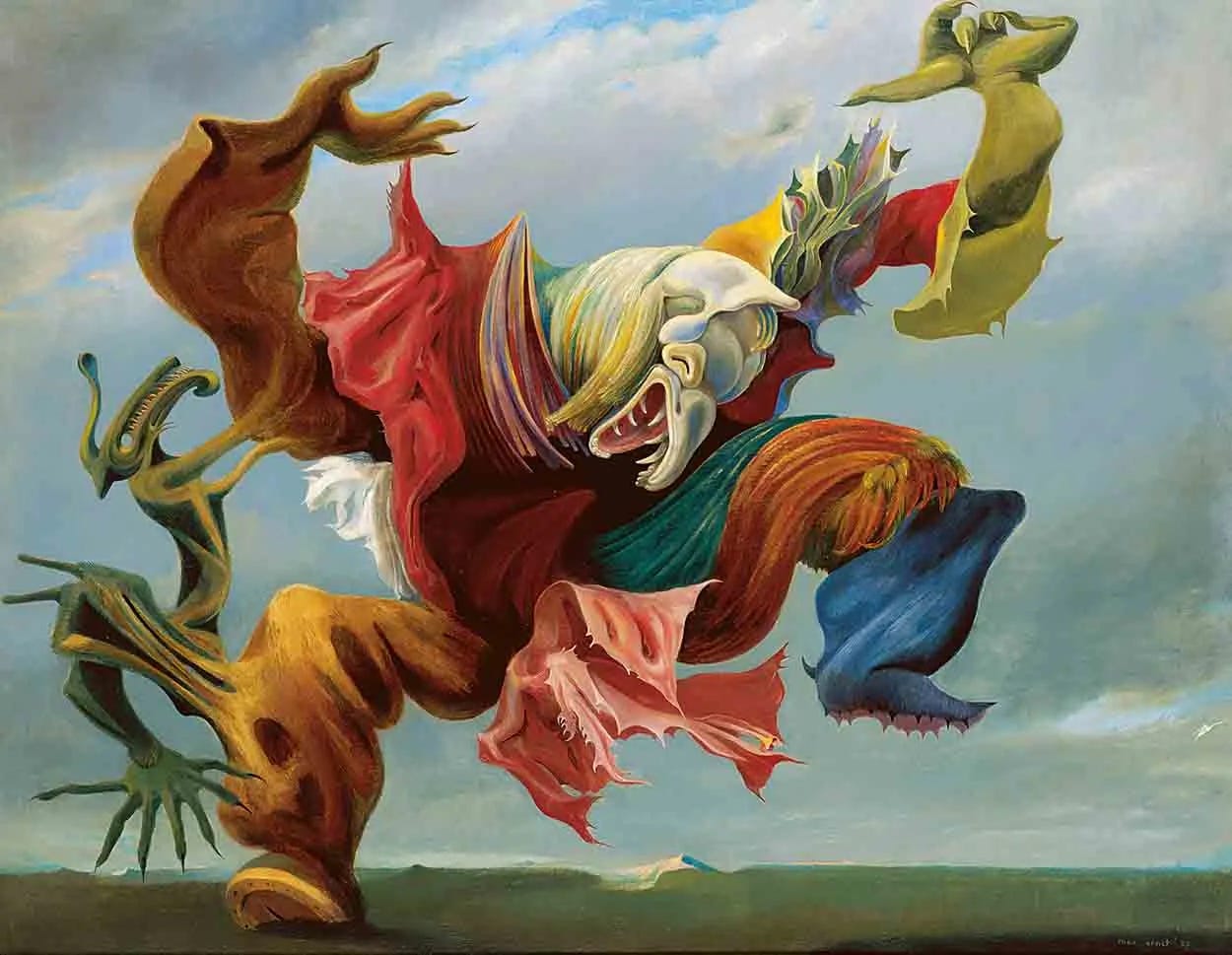
His work from this period is haunting, with forests and figures with bird heads (his alter ego was called Loplop). He’d been married twice by the time he was in his forties, had affairs, and was known for being magnetically charming and emotionally unstable. He wanked into a dinner party in London, in June 1937, when he was 46 years old and married to his second wife, and that's where he met Leonora.
Leonora Carrington:
Leonora Carrington came from a completely different universe. Born in 1917 to a wealthy Lancashire textile family, she was supposed to marry well, host dinner parties, and disappear into the monotony of upper-class British life. Instead, she got expelled from multiple convent schools and devoured everything she could find about Celtic mythology, animal stories, and folk magic. Her Irish mother and nanny filled her head with folk stories about animal transformations and ancient magic, and they became the foundation of her art.
When finishing school in Florence, she discovered Renaissance painting and decided art was her way out. She convinced her family to let her study at the Ozenfant Academy in London, where, at age nineteen, she saw Max Ernst’s work at the 1936 International Surrealist Exhibition. Something in his paintings spoke directly to her, and she later admitted, “I fell in love with Max’s paintings before I fell in love with Max.”
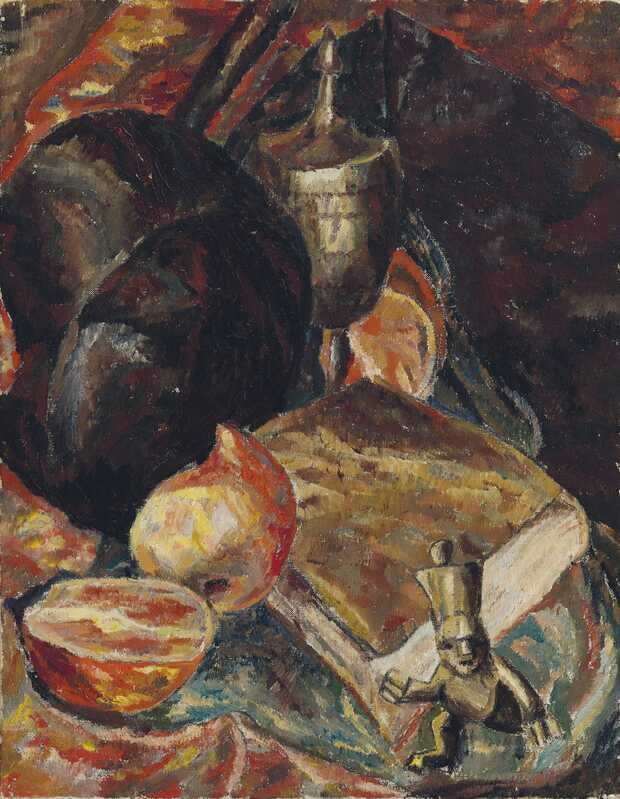
By the time they met at that dinner party a year later, Carrington had already developed a strong artistic voice. She was already painting the wild-haired sorceresses, mystical horses, and hybrid creatures that would define her seven-decade career.
That evening, he put his hand out to stop her beer bottle from rolling off the table, and their story began.
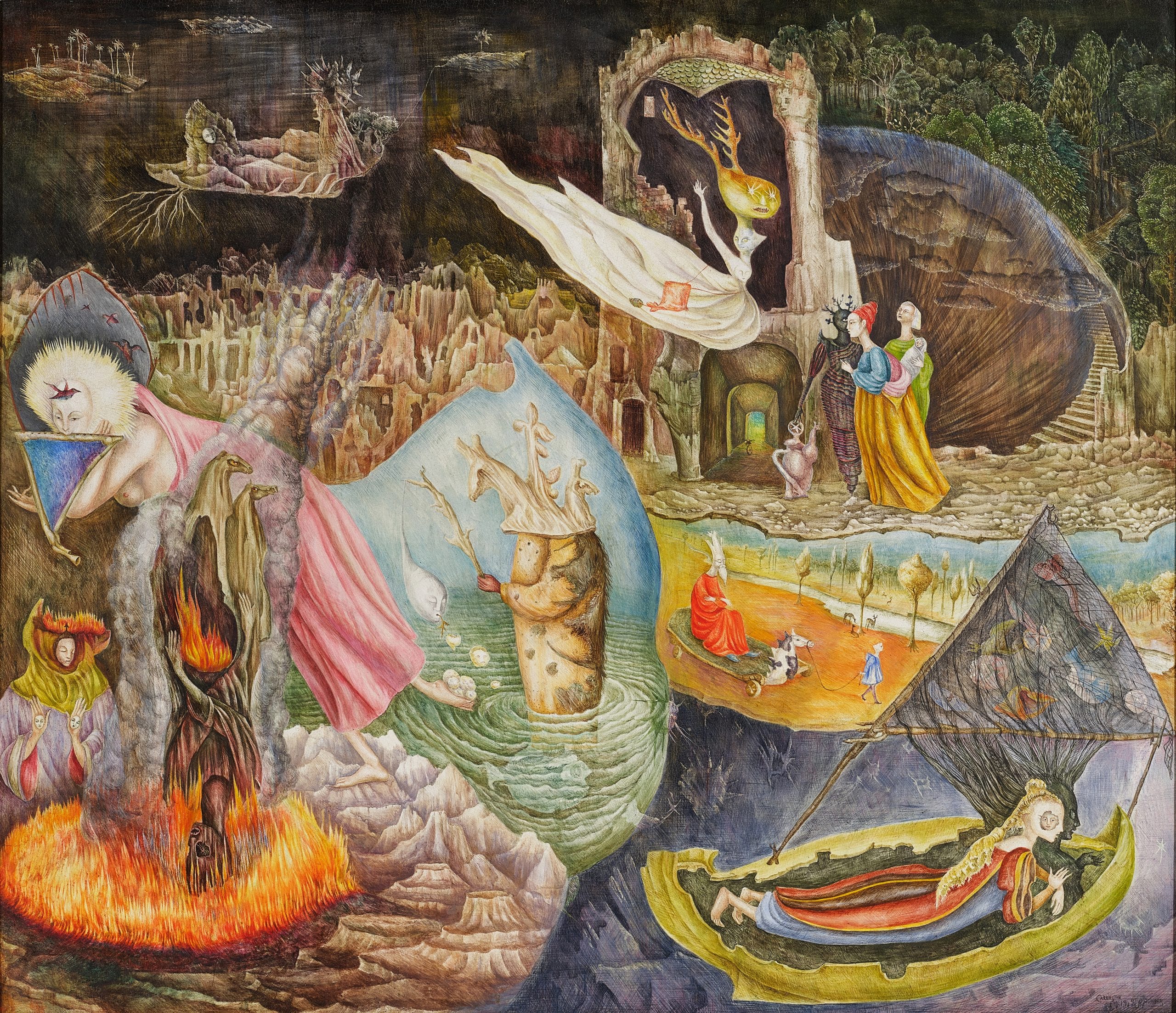
Before, a note on their collaboration
Due to their difference in age and career maturity, it's easy to position Carrington as the student and Ernst as the teacher, but Carrington herself didn't like this narrative, and she was right to do so. She had been painting and writing since she was five years old. Yes, she learned from Ernst: “From Max I had my education: I learned about art and literature. He taught me everything.” But in the same breath, she noted: “It is obvious that I did not write my books under the influence of Max... I do not understand why people want to think that I was a little girl under Ernst’s spell.”
But they did influenced each other, and the space they created together became part of how they both made art.
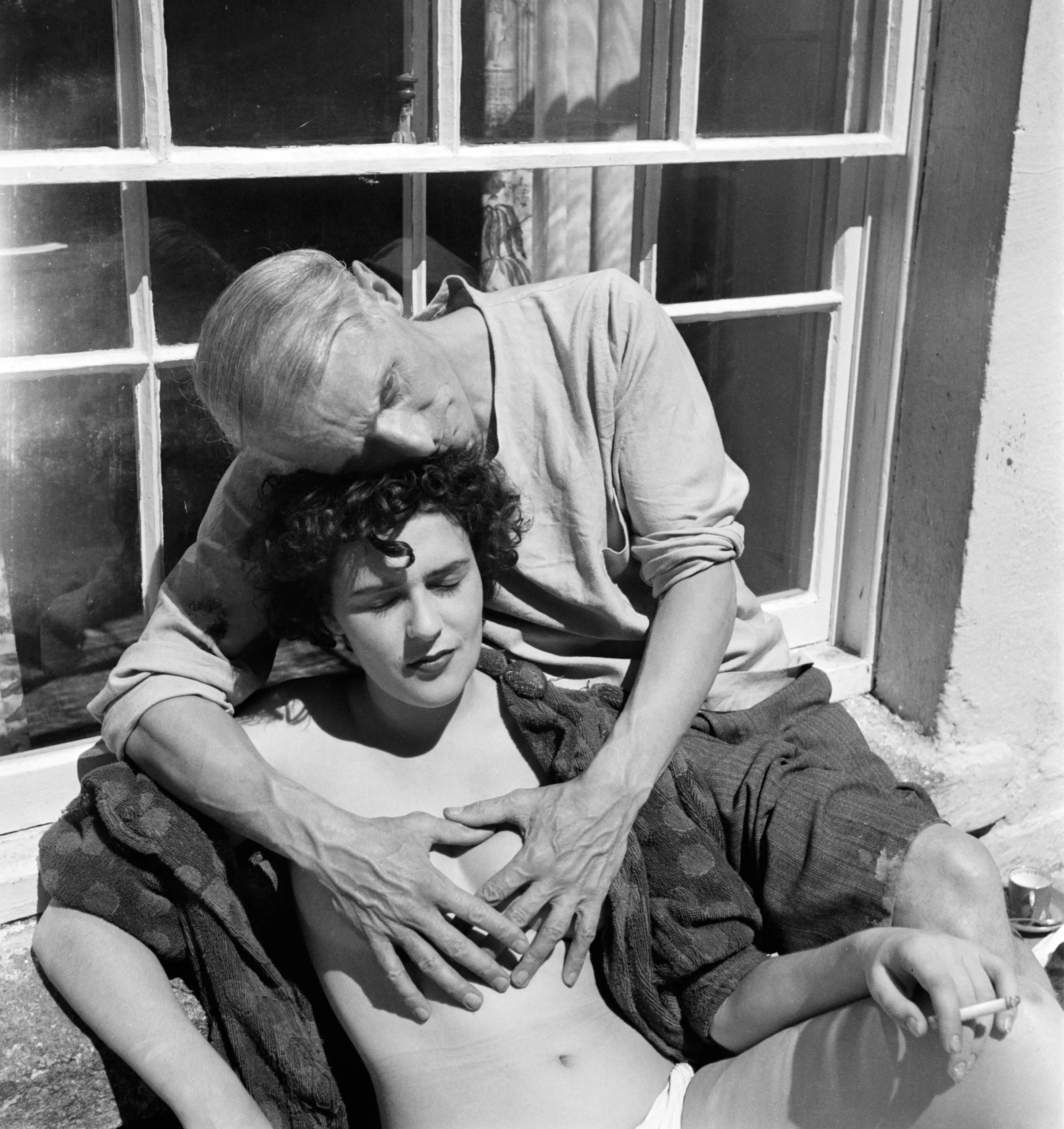
Building Paradise
After their affair started in London, Carrington followed Ernst to Paris. Then, in 1938, they got away, mainly to avoid Ernst's wife. They ended up in Saint-Martin-d’Ardèche, a village in southern France where nobody knew them and nobody cared.
They lived in a hotel first, then a tent. Eventually Carrington bought a stone farmhouse and they started renovating it. They turned the entire building into a collaborative art project.
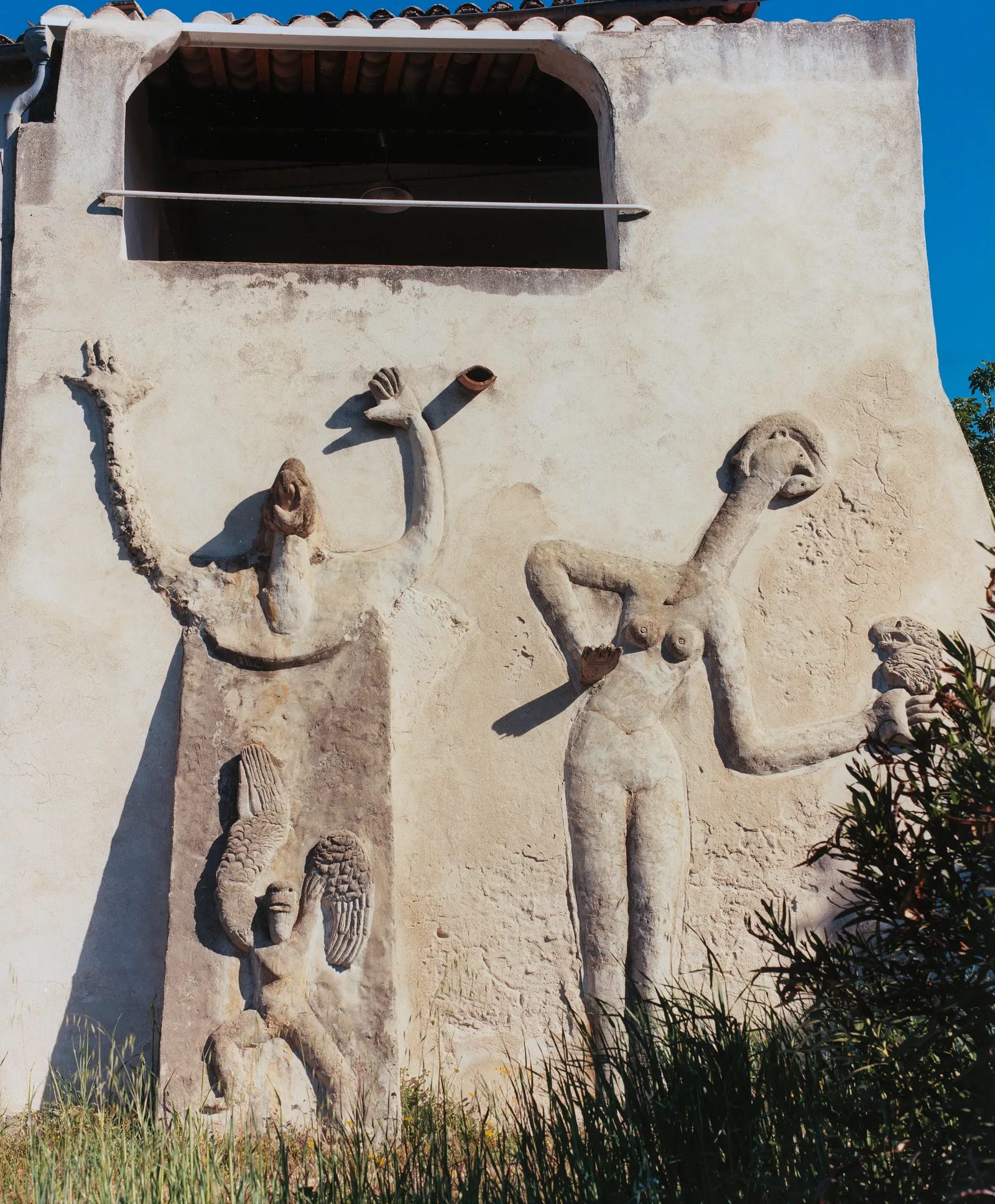
Ernst sculpted concrete reliefs of creatures, installing them on exterior walls and throughout the garden. He created a frieze of a giant in the courtyard. Human-animal hybrids emerged from the terrace walls. Down in the cellar, he designed an elaborate bat mosaic for the floor.
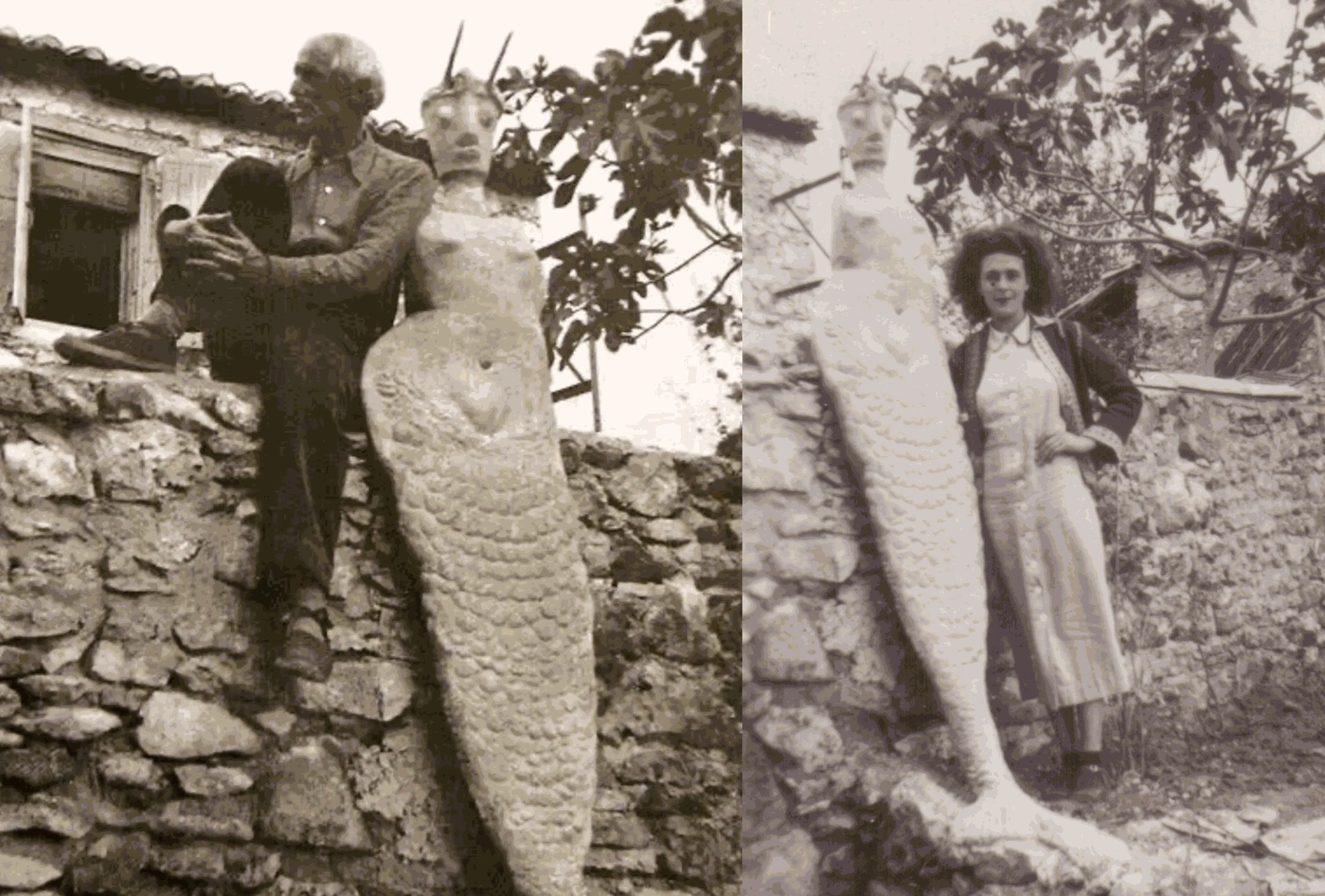
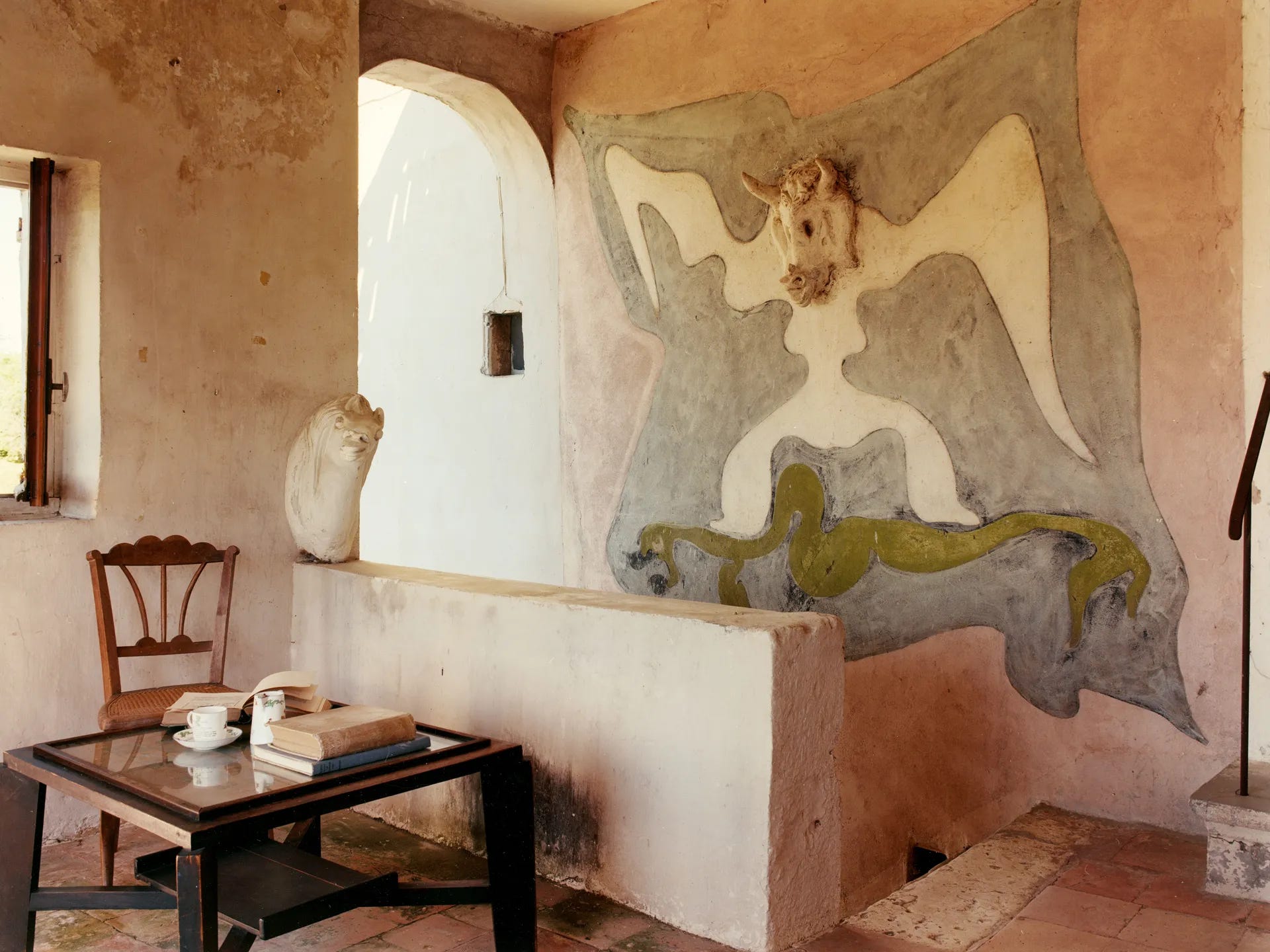
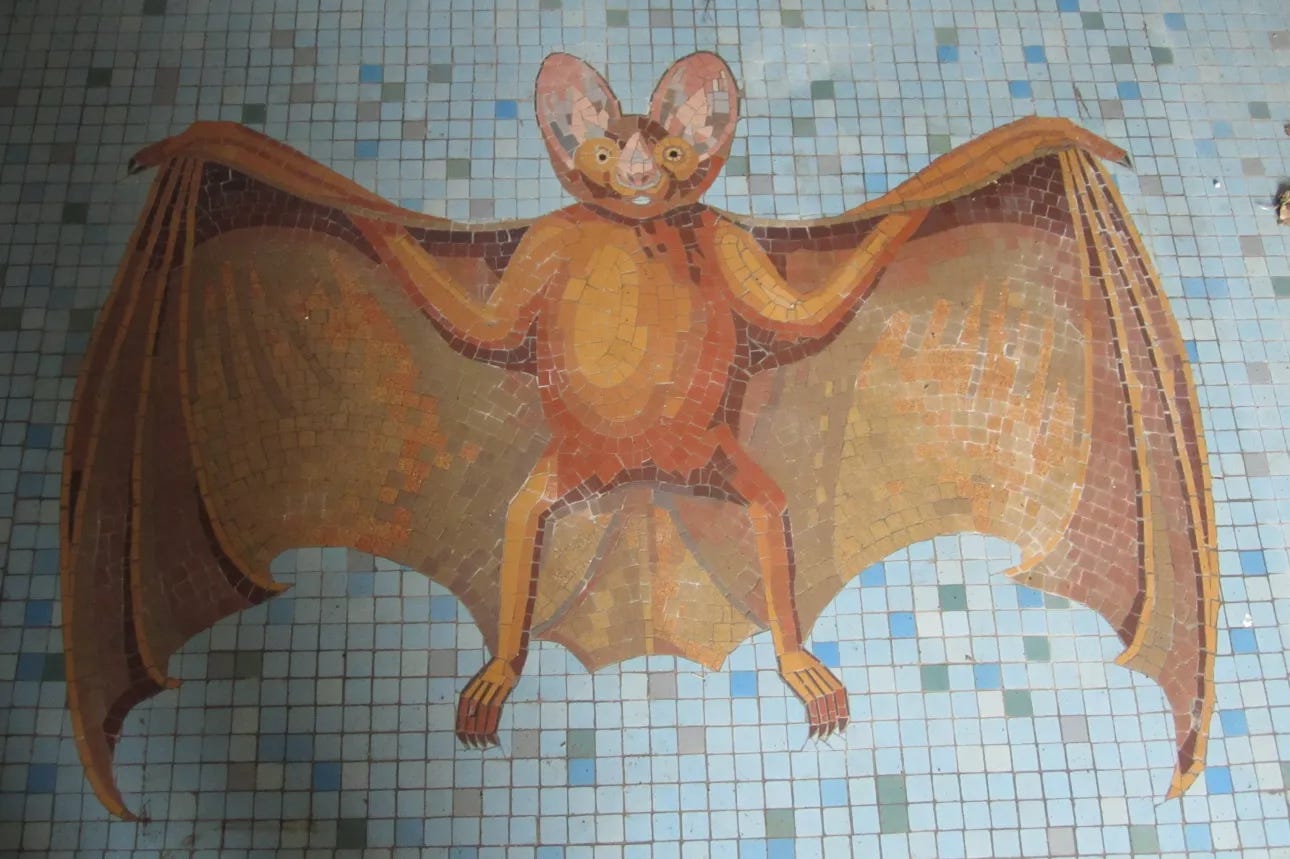
Carrington painted on doors and cupboards throughout the house. One door shows what people think is a self-portrait with her as a horse, which was one of her recurring symbols. Another features a figure with a horse’s face, blonde hair, and tiny black boots. Outside, Ernst made a horse’s head emerging from a stone wall, probably as tribute to her.
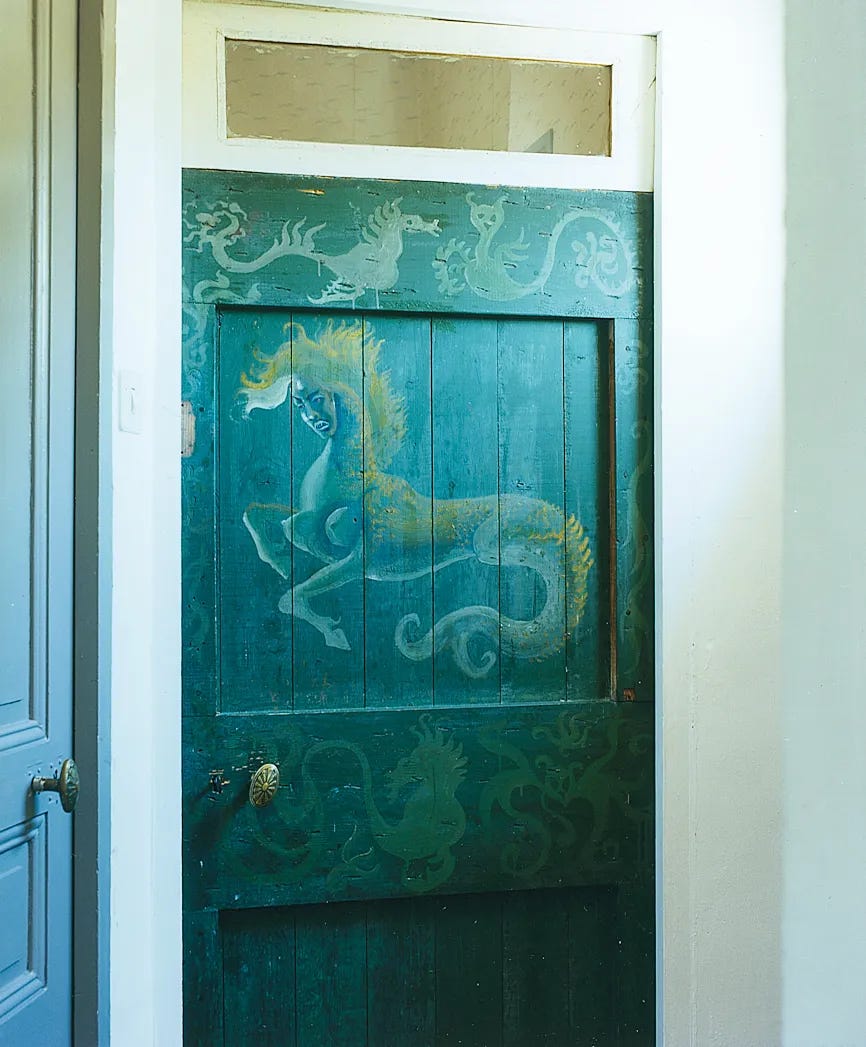
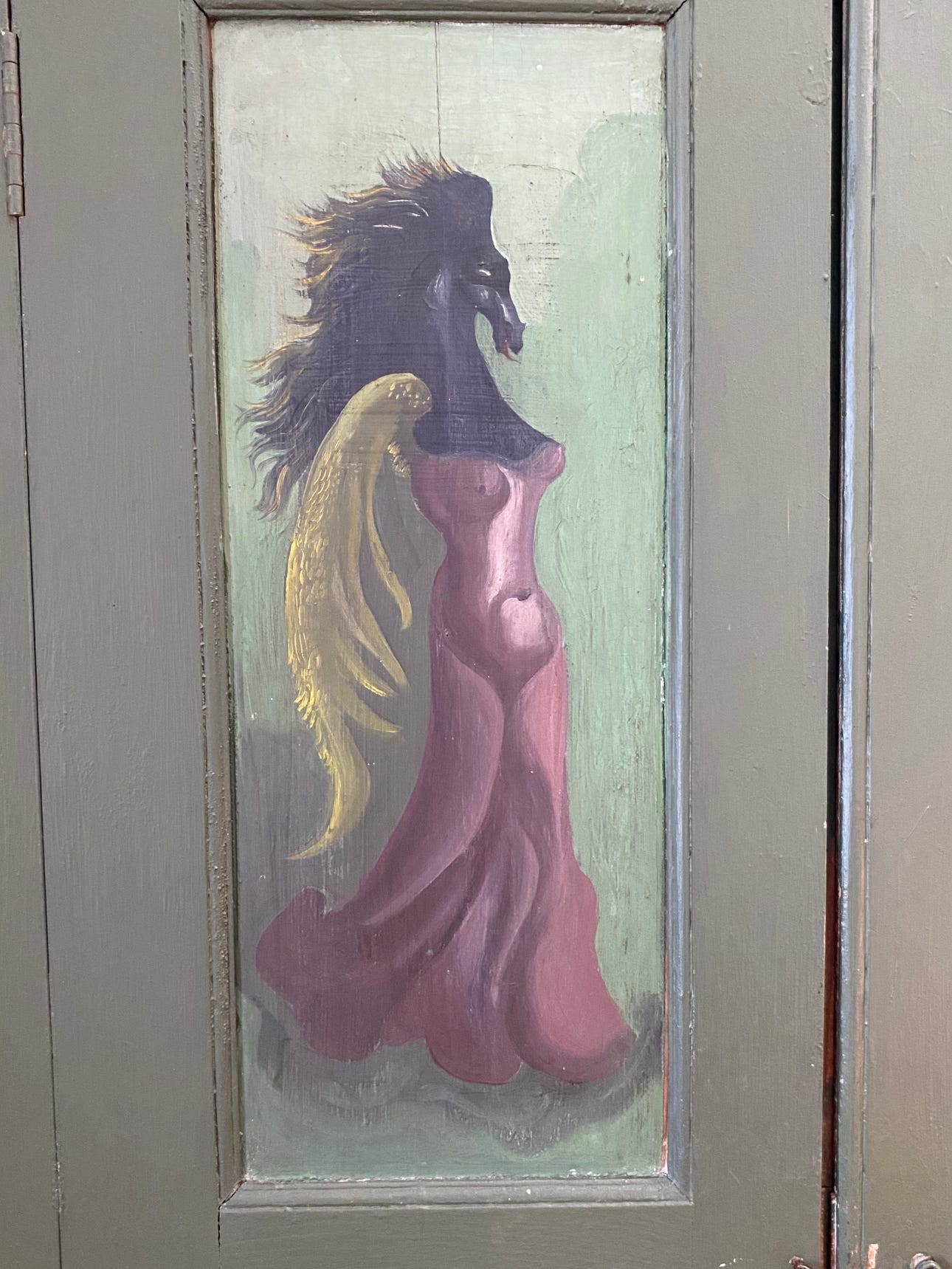
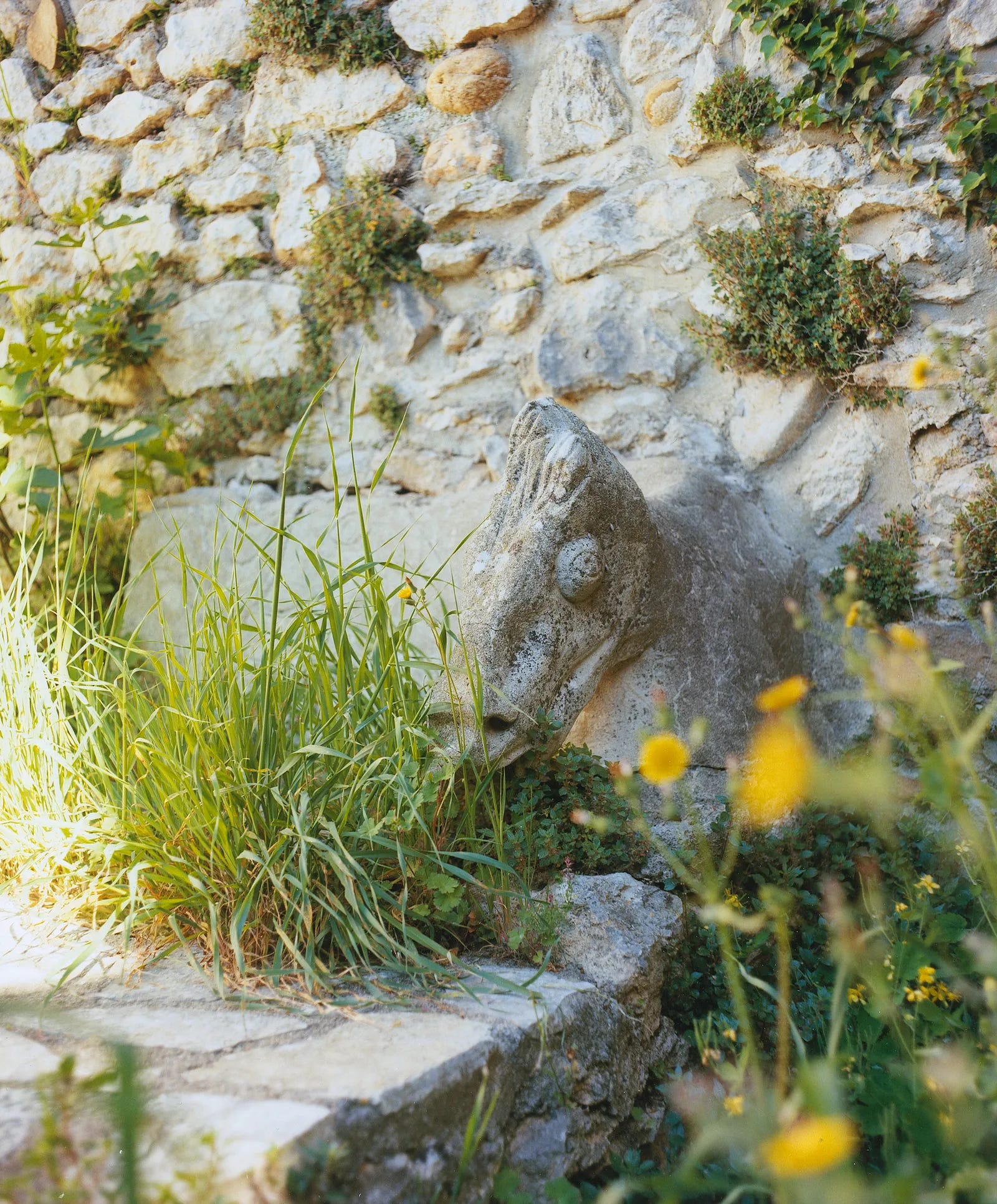
Their books filled the shelves, with Lewis Carroll, Grimm’s Fairy Tales, Irish legends, Poe, the Brontës, volumes on Buddhism, a naturalist’s book about how animals communicate. The house became an extension of their imaginations. They were becoming different artists through living and working together. Not because one was teaching the other, but because they were constantly responding to each other’s images, ideas, and presence.
Carrington later called this period “an era of paradise.”
The War That Ended Paradise
In September 1939, the Second World War started, with Germany invading Poland and France and Britain declaring war. Ernst, German by birth, became an “enemy alien” overnight.
The French police arrested him and sent him to Largentière prison. Carrington was desperate, and she tried everything to get him released, with no success. He got out briefly in November, came home for Christmas. Then in May 1940, they arrested him again and sent him to Les Milles, an internment camp in a former brick factory near Marseilles.
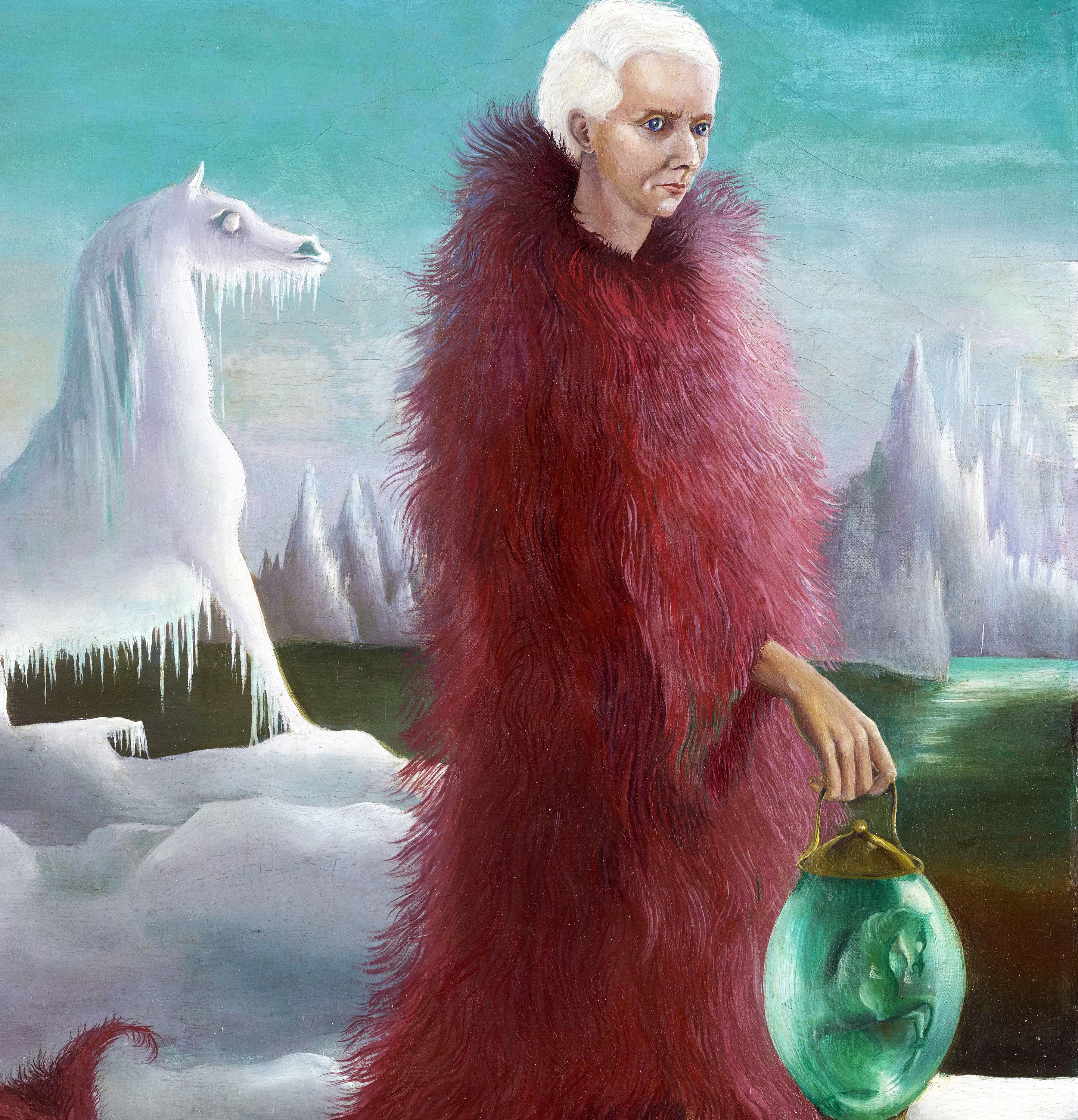
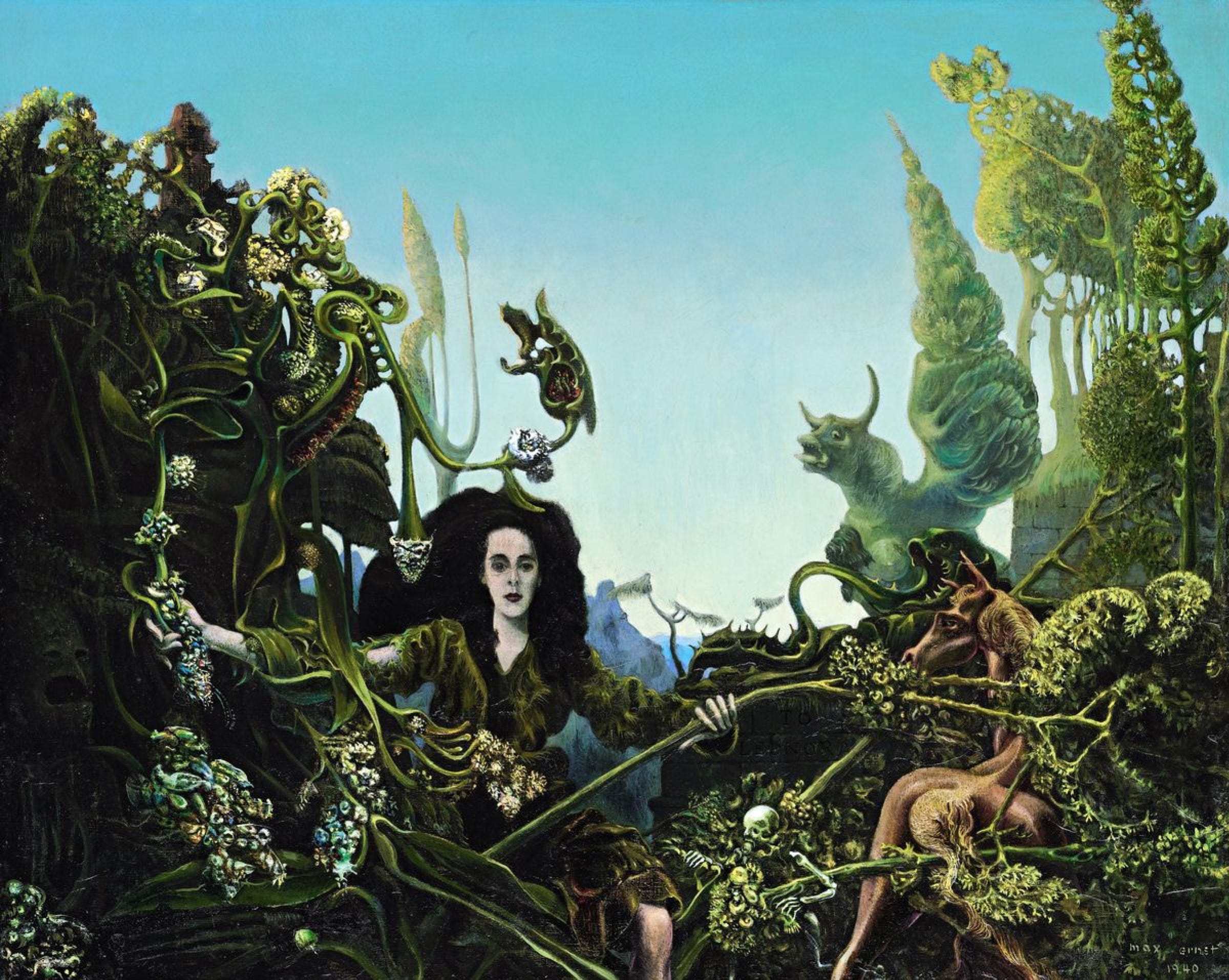
Carrington completely fell apart. The letter she wrote to him during this time is gutting: she called herself the “property of Max Ernst,” said she was “losing my sense of life, of poetry, of everything that I owe to knowing you.”
Friends finally convinced her to leave. She packed a suitcase and abandoned the farmhouse, eventually ending up in Spain, where she had a full psychological breakdown. They institutionalized her in Santander and gave her brutal shock treatments. She wrote about this later in a memoir called “Down Below.”
When Ernst finally got released, he went back to the farmhouse just to find it empty. He took some of her paintings, including her self-portrait, and fled France with help from Peggy Guggenheim, who would become his third wife.
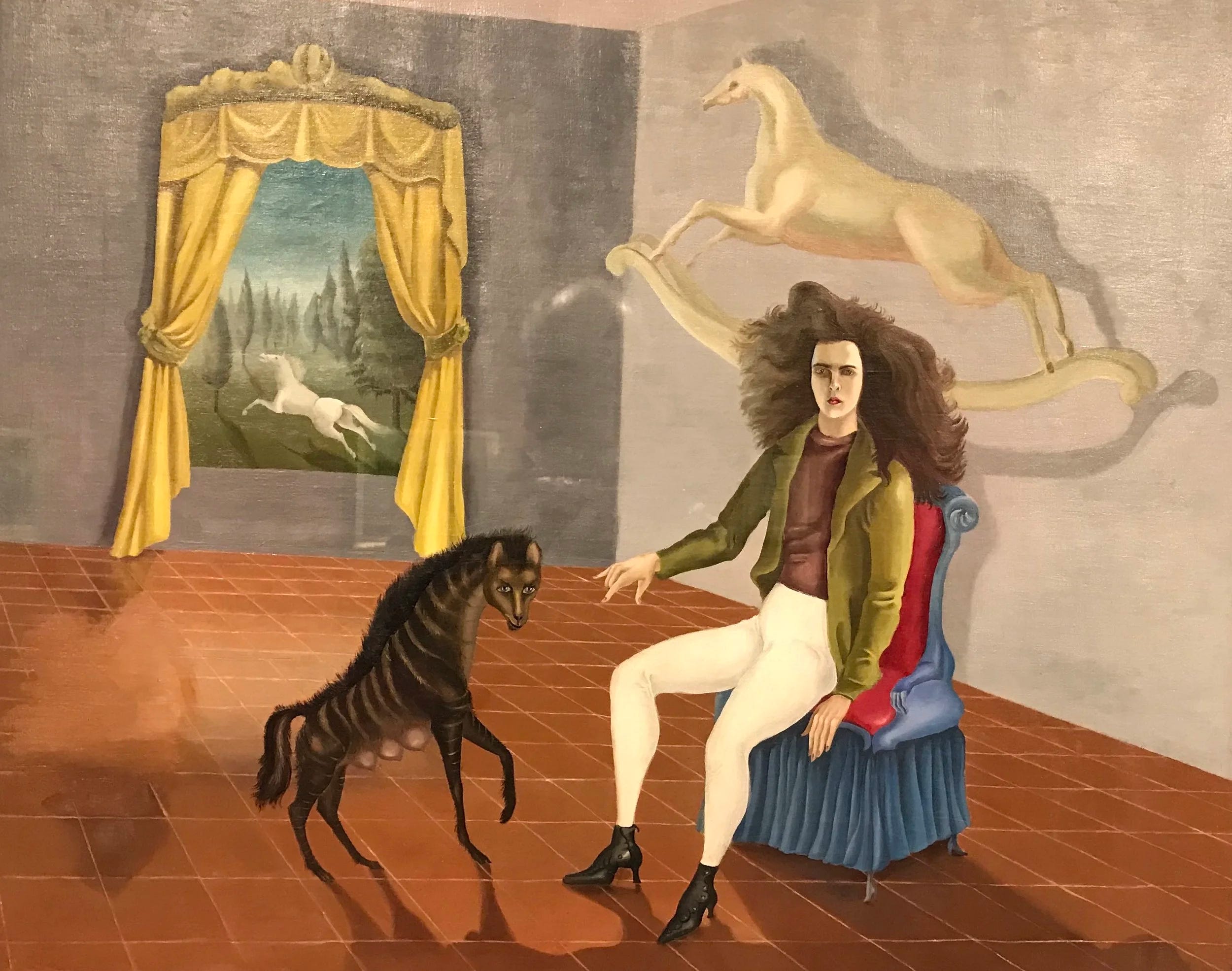
They saw each other one more time, by chance, in a Lisbon street market. By then, Carrington had married a Mexican diplomat named Renato Leduc, a marriage of convenience that got her out of Europe. Ernst was about to marry Guggenheim.
He wrote to a friend: “I have found (and lost again) Leonora... She is unrecognizable... It beats all the Kafka stories. She is defeated.”
Carrington’s version: “He wanted us to get together again... and I couldn’t do it... After all that had happened, I was no longer the same person. There was no going back.”
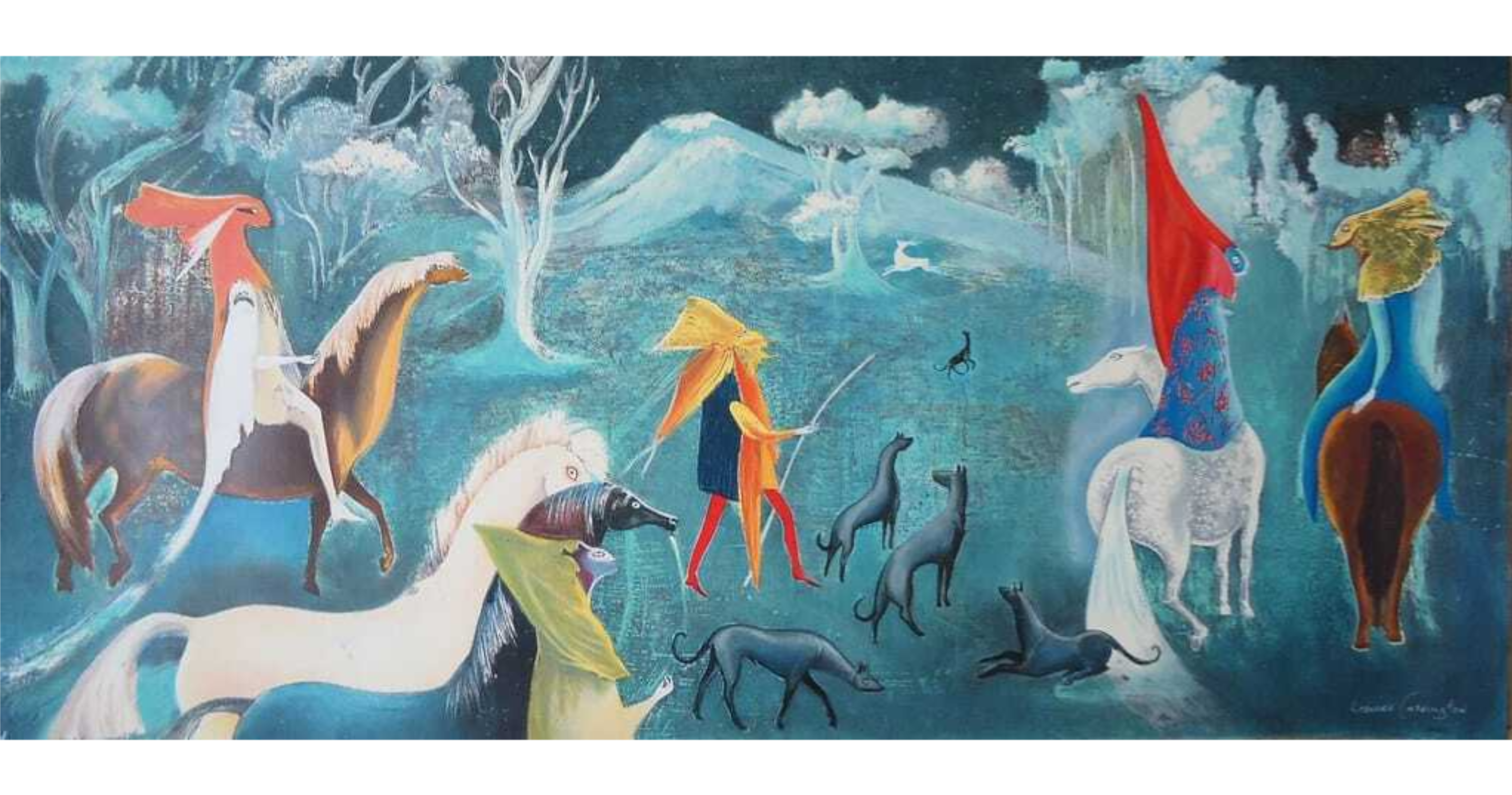
Carrington moved to Mexico and lived there for the rest of her life, painting, writing and sculpting. She created massive works filled with witches, alchemical symbols, creation myths, and powerful women.
Ernst settled in New York with with Peggy Guggenheim, where he became an important figure in introducing European Surrealism to American artists. He later marries the American Surrealist painter Dorothea Tanning and they move to Arizona, where he spent the next decade creating some of his most celebrated sculptures, including “Capricorn”. Eventually, the couple moves to France where he continues to work until his death.
Meanwhile, the house they built together remains standing, and we get to peak into their private creative paradise.
All creation is relational. If you found this post helpful, please consider sharing it with other creators or supporting me with a one-time contribution. ♡
A quote to inspire:
“Creativity is that marvelous capacity to grasp mutually distinct realities and draw a spark from their juxtaposition.”
— Max Ernst
What an incredible peek into an amazing place and time. Thank you for introducing me to what happened there and to the impact it had on the individuals and the art world. I loved seeing the photos. So priceless! (And inspiring to my own artistic journey...)